

“From June 2024 until her arrest, she acted as a journalist on behalf of ‘Tasnim'… As part of her activity, which also occurred during the second Iranian attack on Israel and during Operation Rising Lion, the defendant maintained direct contact with an Iranian operative on behalf of ‘Tasnim’ named Mohsen. As part of that contact, the Iranian instructed the defendant on the activities she was to undertake, approved stories she wrote and was in communication with her regarding her pay." (Taken from the indictment against Farah Abu Ayyash)
Aug. 19, 2025. Interrogation room at the Etzion police station, Judea District. Staff Sgt. Maj. Nassim Hayek enters, carrying a cold glass of water and hands it to his subject. “Do you understand that Iran is a hostile state to Israel?” he asks her in Arabic.
Farah Abu Ayyash, a Palestinian journalist who had been in custody for 19 days, looks at him with contempt. Her legs are shackled. “What do I have to do with your country?” she replies. “Iran is an enemy of Israel. Not mine."
This was her third interrogation. In the first two she had clung to silence. “I refuse to answer,” she reiterated. When Hayek asked why and whether she had something to hide, she said: “I have nothing to hide. My enemy, as far as I'm concerned, is the one who starves two million residents and children. That’s what I can tell you. I hope I made my point clear."
Hayek recorded what she told him. Abu Ayyash sipped from the water and then, for the first time, she began to speak. “I haven’t eaten in 15 days,” she said. “The glass of water you brought me is the first I’ve had in two days. The water we have in the prison is yellow. I don't sleep. They beat me and call me a terrorist. Am I a terrorist? What exactly did I do? I want to go home, Nassim."
In this interrogation, Abu Ayyash revealed information that the police, the Shin Bet and the IDF did not know until that point: Iran had established an active Tasnim office (the Iranian state propaganda agency that calls itself “the defender of the Islamic Revolution from negative media propaganda) in the heart of the West Bank.”
Abu Ayyash said she belonged to a group of Palestinian journalists who were assigned sectors throughout the West Bank and covered, among other things, the “crimes committed by the occupation” for the Iranians in exchange for substantial sums.
Abu Ayyash, a resident of the Palestinian town of Beit Ummar, was responsible for the Hebron sector. She said she received $300 per story, an unusually high amount in terms of the Palestinian economic reality. Over roughly a year, until June 2025, she wrote, edited and sent 35 articles and videos that were published on the Iranian website.
Those stories were published even during Operation Rising Lion in June 2025, when Iran fired 591 ballistic missiles and 1,050 UAVs at Israel. Thirty‑two Israelis were killed in that campaign and 3,508 were injured. All the while, according to the indictment filed against her, Abu Ayyash was corresponding with Mohsen, the head of the Tasnim agency in Iran and her de facto editor.
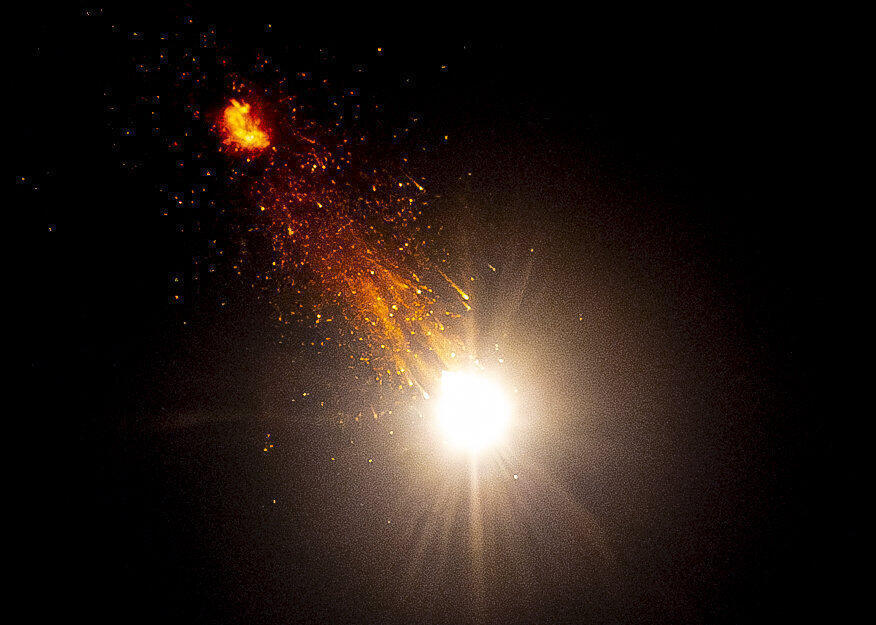
On June 19, 2025, for example, Abu Ayyash sent her editor a video of an intercepted missile fired at Tel Aviv. The Iranian asked her: “Did the Iranian missiles hit any gas stations in the area?” and Abu Ayyash answered, 'No'. That was just part of the sensitive information she passed to her Iranian operator.
The indictment against Abu Ayyash was filed with the Judea military court on Sept. 2, 2025. The charges, signed by military prosecutor Lt. Eliran Totiashvili, include contact with the enemy, injecting enemy money into the area, incitement and support for a hostile organization.
“This is the first case of its kind in the country,” says Master Sergeant Hayek, the investigator who got Abu Ayyash to talk. “A Palestinian journalist working for Iran, and an Iranian agency established in the West Bank under Israel's nose."
Now, for the first time, Yedioth Ahronoth's weekend magazine is releasing the interrogation transcripts in this sensitive case and the account of the young investigator who earned the trust of the journalist working for Iran and got her to speak.
× × ×
The “golden information” about a Palestinian journalist in contact with Iranian operatives reached the West Bank district police at the end of July this year. “The initial information indicated that Abu Ayyash was filming and sending pictures of missile impacts to officials in Iran and also reporting to them on the economic situation in the West Bank following the war,” Master Sergeant Hayek says. “Since she was a journalist, the Iranians gave her assignments different from what they give to civilian spies they recruit."
Abu Ayyash was immediately arrested. “At first she invoked her right to remain silent. She did not even want to consult an attorney and refused to answer the investigators’ questions."
What do you do in that case?
“You take her phone apart. You check all the contacts listed and whether they have security backgrounds. Anyone suspicious is flagged and she is interrogated about them. You also examine all her social media profiles: Facebook, Instagram and Telegram, and you come to the interrogation prepared with all the findings, the reports and her text messages."
How do you check Telegram? There’s an option for secret chat.
“With a hacking tool by Cellebrite, a digital forensics system through which you can uncover also those chats."
What did you know about Abu Ayyash before the interrogation?
“She’s 24, the fifth of nine children — eight girls and one boy — living in Beit Ummar. Her father was interrogated several times for illegal residency offenses. She has no contact with her parents and lives with her grandmother. She is officially married but, in the process of divorce, as she claims. She distances herself from her husband and refuses to talk about him. She has a dog named Lutzi."
What’s her media background?
“She holds a bachelor's degree in communications and has an official international press card from a human rights organization. She allegedly worked as a freelance journalist for PNN — the Palestine News Network — and Wattan, an independent Palestinian news agency, before being recruited by the Iranians."
What was your impression of her during the investigation?
“From the very beginning, I realized she was very smart; the kind of person you can’t break using conventional interrogation methods."
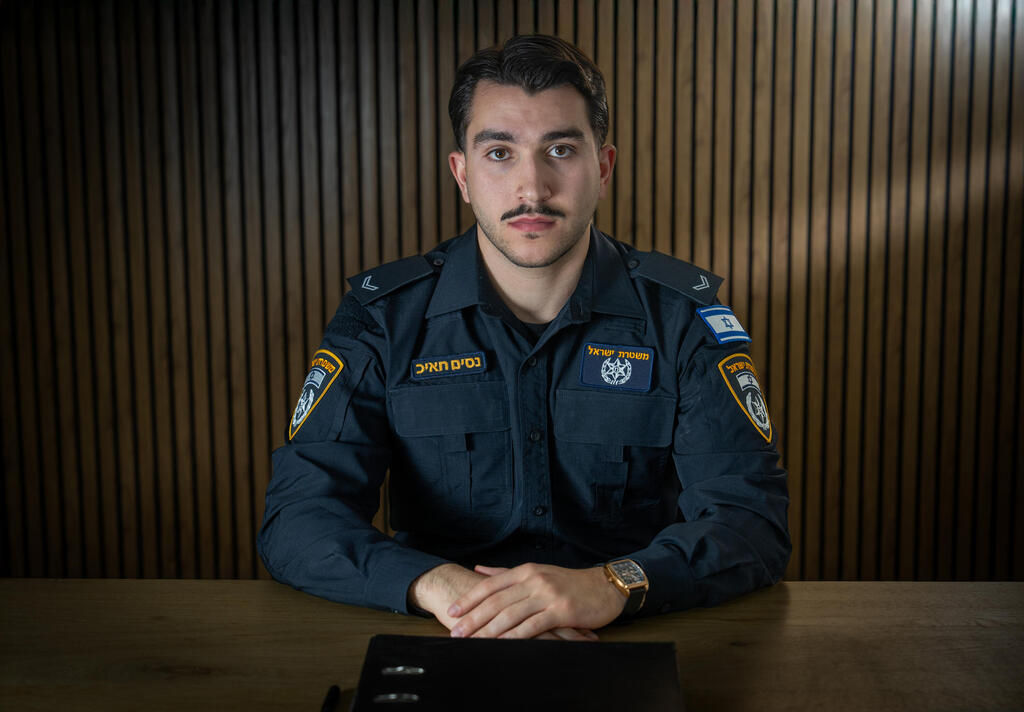
After the first, unproductive round of questioning, Hayek understood he needed to change tactics to get the hostile subject to open up. “The approach I took, intuitively, is what professionals call 'non-violent or compassionate communication'.
What does that mean?
“It means being empathetic and attentive to her suffering and needs. Listening. Giving her space to vent her anger and frustration. indulging her requests. Bringing her food, cold and hot drinks, watermelon, chocolate. Showing interest in her dog. Building trust. Through that, I push for contact and help her open up."
The first contact on Abu Ayyash’s phone that aroused Hayek’s suspicion was a man named Baraa Shweikat. Abu Ayyash explained that Baraa was her boss in the West Bank. “Give me more details about Baraa, tell me what you know”, Hayek asked her.
“He’s a journalist, 40 years old, from Ramallah,” she said. “He called me in June last year with an offer to work for Tasnim. He was looking for a journalist from the Hebron area and had heard about me. I never met him face to face."
At this point, Hayek made sure Abu Ayyash knew exactly who she was about to be working for. She said she did. “I was generally familiar with Tasnim,” she said. “When they told me I’d be working with them, I looked up their website to see if the organization matched my standards. I try to adhere to my ideology; for instance, I would never work for a place that uses terms like ‘the Zionist entity’ instead of ‘the State of Israel.’ I was looking to work for a place that didn’t involve politics and wouldn’t get me into trouble."
Baraa, she said, recruited journalists from across the West Bank: one in Jenin, another in the north, one in the south, and Abu Ayyash in Hebron. Each was responsible for their own sector and asked to produce field reports and interviews.
“At first I communicated solely with Baraa. He would tell me what stories to work on and how to edit them,” Abu Ayyash told investigators. “He would then pass the material to Mohsen, the Iranian editor in Tehran. Mohsen would approve it, and Baraa would send us the money through a third party. I’d go to a guy who worked at a money-exchange shop in Hebron, tell him I was there to collect money, show my ID, and get the money in cash."
× × ×
For the first seven months, all communication with the Iranians was through Baraa. But at some point, Abu Ayyash began to suspect something was wrong. “It turned out that he was a drug addict,” she said. “We found out he was skimming our pay. Out of the $300 per article, he’d keep $150 for himself. Suddenly, we stopped getting paid for our work. Altogether, he owed us almost $13,000."
In December 2024, Baraa disappeared. “I know he was arrested by the Palestinian Authority. I haven’t heard from him since."
That's when Abu Ayyash decided to take matters into her own hands. “Once he left, we decided to contact Tasnim in Tehran directly, as we wanted to get paid for our work. We didn’t trust anyone anymore. We didn’t want to wait for a replacement."
Hayek asked how she managed to contact Mohsen. “I had his number from Baraa,” she explained, “so I reached out to him on Telegram."
In the following months, Abu Ayyash sent stories directly to Mohsen. “Stories about people here and what they’ve been through. After he approved them, I would publish the articles."
Hayek asked whether she understood the significance of her actions. “Do you understand that making contact with someone affiliated with Iranian media is, in every way, contact with a hostile entity?"
“As a Palestinian journalist, I do my work in the most professional and reliable way,” she replied. “Everything I do is legal. I work within my designated area in Hebron. Just like foreign journalists come to Israel and report on the situation here; why don’t you arrest them? Did I know that contacting an Iranian media outlet is illegal? No, I didn’t. When I finished my training in journalism, no one told me who I could or couldn’t work with."
Abu Ayyash’s third interrogation lasted for hours. Hayek asked about the articles, the money, and her connection to Mohsen. Abu Ayyash answered in detail. She defended herself, but she no longer remained silent.
At one point, Abu Ayyash asked for chocolate. Hayek noted it in the transcript: “The suspect requests chocolate. I return to the room with a piece of cake.” Abu Ayyas was pleased with the gesture and ate the cake.
The interrogation ended after four hours. Hayek got almost the full picture; she talked about the articles, the money, the network, the direct contact with Iran, and with Baraa. But he knew he still needed more. He needed a full confession.
× × ×
The fourth interrogation took place on Aug. 25. Abu Ayyash’s detention was extended for the fourth time by the military court for further investigation. She was losing patience.
“Look, Nassim,” she said before the interrogation began, unaware the room was constantly recorded and filmed, “I’ve already been questioned four times. I’m speaking on my own behalf. I’m telling you everything. Why are you dragging this out?
“I’m not stupid. I know that the investigator is a good guy. I mean, the prison treatment is awful, everything I experience there is bad. But when I come to the investigator, I see humanity, and I know I’m human. But this is your way of extracting answers from me, even though I’ve already told you everything. I’ve talked about everything."
She broke down further: “I’m tired of being here after 20-something days, four court hearings, four interrogations. You’ve got nothing on me, and you keep asking the same questions over and over."
Hayek listens. He doesn’t argue. He sticks to his approach.
Before the interrogation begins, he brings her a cup of tea, and a surprise. “After learning in the previous session that we both support the soccer club Barcelona,” he wrote, “I let her watch a recap of their last match against Levante, which they won 3:2."
How did she respond to the gesture?
“With excitement.”
After breaking the ice, Hayek resumed the questioning: “We reviewed your Facebook account. There is content there that could be interpreted as incitement. What's your response?"
“I have no intention of inciting against any country through a post or a video,” she replied. “I’ve never thought about that. Not even about your country. I didn’t incite and I didn’t act. Nothing more, nothing less. I’m not saying this because I’m under investigation, but because this is the truth."
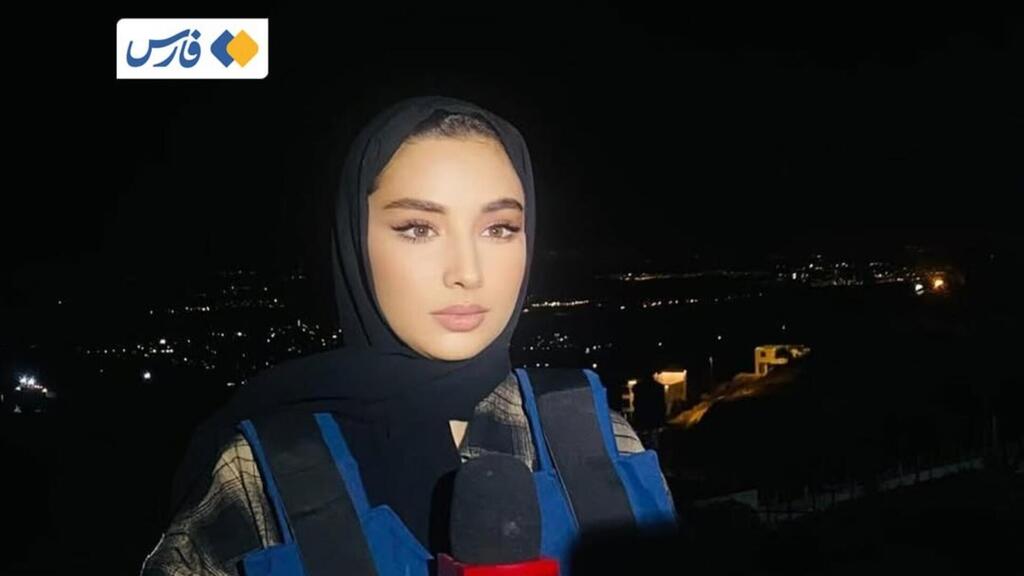
Hayek showed her a photo of herself in a press vest, holding a red microphone marked “Tasnim” in Arabic and English. “Do you recognize yourself?” he asked. She admitted she did.
Abu Ayyash then asked to wash her face, claiming she had a fever. Hayek escorted her to the restroom. “As we stood to walk together,” he wrote in the transcript, “Abu Ayyash lost consciousness and collapsed. We immediately called Magen David Adom. I sat her up against the wall, gave her water, raised her legs, and placed a cushion under her head. After a full check, MDA paramedics said all her vitals were normal, nothing unusual."
Still, Hayek was concerned. He repeatedly asked if she wanted to drink or eat. Abu Ayyash refused. “I gave her a few minutes to regain composure,” he wrote, “to breathe deeply. I practiced breathing exercises with her to regulate her pulse and calm down. I went out and bought her a Coke from the vending machine, with my own money."
The interrogation continued. Hayek asked about the payments she received, then changed the subject. “Earlier you told me that prison service officers assaulted you. Please elaborate. I will handle it. I have an obligation to record a detailed complaint.”
Abu Ayyash said: “During the last interrogation, there was a female escort officer who took me from the prison to the questioning here and back. She hit me the whole way. She cursed me and spit on me. On the way here, she beat me inside the minibus. On the way back, she hit my legs. She cursed me and said awful things."
Hayek recorded in the transcript: “The suspect begins to cry and says she wants to go home, and she doesn’t belong with the inmates."
At that point, he presented her with more content she posted on her Facebook account: videos of funerals for Palestinian terrorists, protests over the assassination of Hamas political bureau chief Ismail Haniyeh, and posts featuring green heart emojis (a known sign of support for Hamas). “I was covering the events, like any journalist,” Abu Ayyash explained.
The fourth interrogation ended. Hayek knew he was close. He saw her breaking down, saw the trust that had formed. He saw that Abu Ayyash needed him, that she wanted him there. She even called him “sweetie” during breaks, and Hayek realized she saw him as more than just an investigator. “The guys at the station make jokes about me, asking, ‘How’s your girlfriend doing?’” he said.
Hayek, 23, had only been with the police for a year. He’s from Deir Hanna in northern Israel. He once dreamed of being a soccer player, he played in his youth with Beitar Jerusalem club as a goalkeeper and later played professionally with Hapoel Acre in the National League. “I quit playing due to knee and shoulder injuries,” he said, “and joined the police."
The Farah Abu Ayyash case was his first major investigation.
× × ×
One day, when Hayek was absent from the station as he was attending his investigator training graduation ceremony, where he received top honors, Aby Ayyash refused to be questioned. “When she saw I wasn’t there,” he recalled, “she got upset, resisted, and refused to be questioned by anyone else. When told she had no choice, she shut down and wouldn’t open up to the other investigator."
That was the fifth and final interrogation, held on Aug. 28, one day before her fourth detention extension expired and before the prosecutor issued a statement of intent to file an indictment.
This time, Abu Ayyash was questioned by Advanced Staff Sgt. Maj. Roy Avraham, using a translator. Avraham presented her with data extracted from her phone, articles published on Tasnim targeting Israel, and her messages with Mohsen, then he asked for her comment.
“I work for that outlet,” she said, “but I’m not responsible for what they publish."
5 View gallery
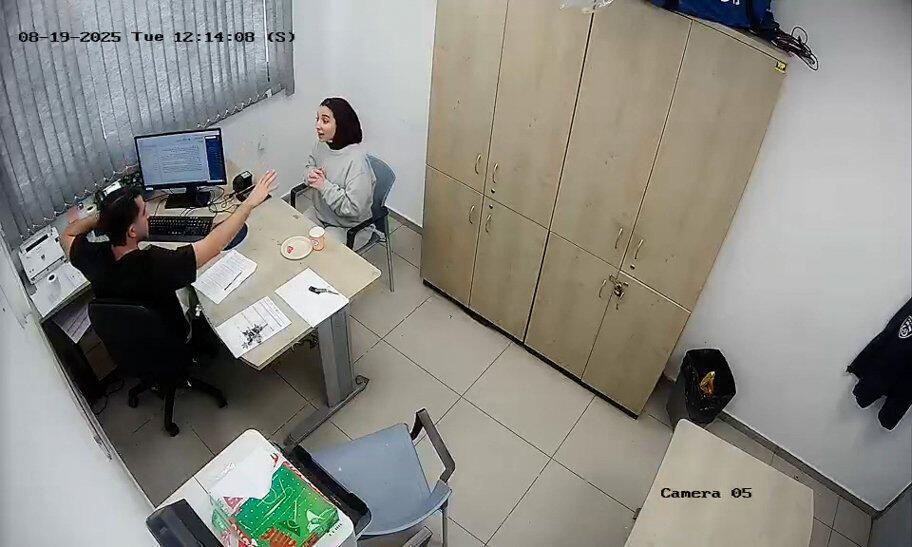
Inside the interrogation room. Master Sergeant Nassim Hayek and journalist Abu Ayyash
(Photo: Shalev Shalom)
Avraham asked why she chose to work with an Iranian news agency. “I’ve worked with many outlets,” she said. “PNN, Wattan, and Tasnim. I hold Palestinian citizenship. I’m not an Israeli citizen, so Israeli laws don’t apply to me."
The investigator pressed her: “Do you identify with that outlet?" Abu Ayyash replied, "I’m a journalist. I have nothing to do with politics. It’s just work."
Avraham then confronted her with articles she published, featuring Israeli soldiers. He asked about the context. “That was around 2021,” she said. “I asked the army for permission to photograph, and they approved it. I don’t remember exactly what the event was. Maybe a protest, or a funeral."
He asked about another photo. “Every Saturday, Jewish settlers come for tours in Hebron’s Old City,” she explained. “Before filming, I showed my press card and got permission from a District Coordination and Liaison officer to photograph from ten meters away, so I wouldn’t interfere with the soldiers' activity."
Avraham showed her a video she had taken of an Iranian missile interception. “Let me ask again,” he said. “Do you identify with Tasnim’s agenda?"
“We live in a digital age where everyone has a phone,” she said. “I didn’t go in and film the missiles. I have no problem with anyone. I didn’t incite against Israel. My work is journalistic, and the accusations against me are false."
The fifth interrogation concluded. Hayek wasn’t there, but his work was fruitful. Abu Ayyash had spoken. She admitted contact with a foreign agent. She exposed the Tasnim network operating inside Israel, Baraa, Mohsen — enough to justify an indictment.
The eight‑page indictment detailed her activities from the moment she began working directly with the Iranian. It included excerpts from their conversations. For example, on the day she uploaded footage of a missile interception in Tel Aviv, she reported to the Iranians that an individual had been killed in a shooting by Israeli settlers at Surif, near Hebron.
Her messages with the Iranian operative revealed that Mohsen instructed her to focus on stories portraying “occupation crimes.” One story covered IDF's entry into Hebron following the outbreak of Operation Iron Swords. Another focused on the effects of military operations on local residents.
The indictment also claimed that Abu Ayyash published social media posts expressing praise, sympathy, or support for a hostile organization, its actions or goals.
Her detention was extended until the end of the legal proceedings against her, and she was transferred to Damon Prison, where female security detainees are held. Her complaint about being beaten by a female prison guard is under investigation by the Prison Guards Investigations Unit.
The Israel Prison Service said in response: “This is an absolute lie, another fabrication and propaganda targeting our officers, who act professionally toward a detainee against whom an indictment was filed for crimes against the state security.”
Staff Sgt. Maj. Nassim Hayek didn’t get to say goodbye to Abu Ayyash, but thanks to cracking the case, he received a commendation from West Bank District Commander, Maj. Gen. Moshe Pinchi.
In the end, how do you explain being the only one who got her to talk?
Hayek: “I told her that my motto was 'humanity above all'. That’s how I see it. And she liked that. Thanks to trust and open communication, I was able to break her silence and uncover the network that activated her, which is now under investigation."
Farah Abu‑Ayash’s attorney, Mundar Abu‑Ahmad, declined to comment on this article.
A news agency that encourages attacks on Israel
“Tasnim serves as an Iranian propaganda platform directed at Israel,” said Beni Sabti, an Iran expert at the INSS who led the establishment of the IDF Spokesperson’s platforms in Persian. “It functions as a Revolutionary Guard tool for spreading anti-Semitic conspiracy theories and encouraging attacks on Israel."
Founded on June 30, 2012, by senior Revolutionary Guard commanders, Tasnim has since served as a propaganda tool for the Iranian regime, covering terrorism and the nuclear program. Its declared mission is “to defend the Islamic Republic from negative media campaigns and present the reality on the ground to its readers."
“The agency’s headquarters is located in Tehran,” said Sabti. “They have correspondents across Iran, the Middle East, and apparently also in Europe. Tasnim publishes content in Persian, Arabic and English."
As a media arm of Iran’s Islamic Revolutionary Guard Corps, the agency’s content includes blatant incitement against Israel and antisemitic messages. “According to the Anti-Defamation League, Tasnim published a series of articles claiming that the coronavirus pandemic was part of ‘an American and Jewish conspiracy to control the world through population control,’” Sabti said.
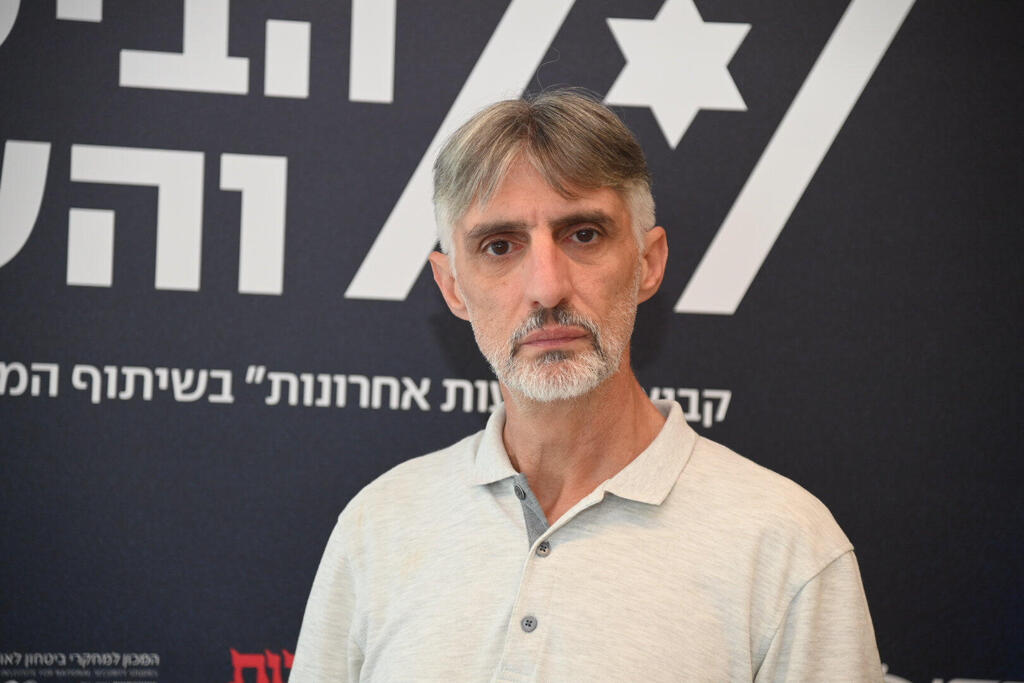
“They alleged that the mastermind behind the scheme was Henry Kissinger, who died in November 2023 at age 100. That illustrates the kind of antisemitic propaganda and conspiracy theories the agency promotes."
Alongside its anti-Israel and anti-Jewish rhetoric, the network also spreads pro-Iranian propaganda aimed at promoting the regime’s messages in the West. “On Sept. 15, 2023, the European Union imposed sanctions on Tasnim for ‘serious human rights violations in Iran,’” Sabti said.
“It turns out the agency assisted the Revolutionary Guards, the Ministry of Intelligence and Security, and law enforcement in identifying protesters. They published images of anti-regime demonstrators on their website and social media channels, asking the public to help identify them."